Moving From Philadelphia To Wilmington, DE: Housing Guide
July 23, 2026
July 23, 2026
Thinking about leaving Philadelphia but not ready to give up city convenience? Wilmington can be a smart next move if you want to stay connected to the Northeast corridor while potentially lowering your home price and some closing costs. In this guide, you’ll see how Wilmington compares with Philadelphia on housing, commute access, and neighborhood feel so you can make a more confident move. Let’s dive in.
If you want a city that still feels connected to Philadelphia, Wilmington stands out right away. The City of Wilmington describes it as about 30 minutes south of Philadelphia, with access to I-95, I-495, and Wilmington Station for Amtrak and SEPTA service.
That means you can stay close to major job centers and regional travel without starting over in a completely different lifestyle. For many buyers, that balance is the big draw.
Wilmington also offers a mix of walkability and daily convenience. The city highlights Market Street, Union Street, Trolley Square dining, and 552 acres of parks, including Brandywine Park.
One of the biggest questions is simple: will your money go further? Based on Redfin’s May 2026 snapshot, the median sale price in Philadelphia was $289,827, while Wilmington was $239,856.
That puts Wilmington about $49,971 lower, or 17.2% less, than Philadelphia on the same snapshot. For buyers coming from Philadelphia, that price gap can open up more options or reduce monthly housing costs.
Price per square foot tells a similar story. Philadelphia was at $226 per square foot, while Wilmington was at $192.
This does not mean every Wilmington home is a bargain or every Philadelphia home costs more. It does mean Wilmington may give you a chance to stay in an urban market while paying less for the home itself.
You should also know whether the market feels frantic or manageable. In the same Redfin snapshot, both Philadelphia and Wilmington were described as somewhat competitive.
Homes in both markets took about 49 days to sell and averaged 2 offers. That suggests Wilmington is active, but not necessarily so fast that every buyer has to make a rushed decision.
For you, that can mean a little more breathing room to compare neighborhoods, review disclosures, and think through financing. Still, well-priced homes can move quickly, so preparation matters.
If you are used to Philadelphia housing, Wilmington may feel more familiar than you expect. Philadelphia’s housing plan says nearly 60% of residential units are 1-unit attached structures, and about 88% of homes were built before 1980.
Wilmington also has a large share of older and attached homes, but the mix is broader. The city’s housing plan says 63% of the housing stock is single-family, including 53% 1-unit attached and 10% detached homes.
It also reports 12% of units are in 2-to-4-unit properties, 7% are in 5-to-19-unit properties, and 18% are in 20-plus-unit buildings. In addition, 55.6% of Wilmington housing units were built before 1950.
The practical takeaway is that you will likely recognize plenty of attached-home blocks and historic housing character. At the same time, Wilmington may give you more chances to consider detached homes or mixed-unit buildings than many dense Philadelphia neighborhoods.
For many relocation buyers, closing costs are where Wilmington really starts to stand apart. Philadelphia’s realty transfer tax is currently 4.578% total, made up of a 3.578% city tax and a 1% Commonwealth tax.
Wilmington works differently. The City of Wilmington’s FY2027 tax-rate summary lists a 1.50% city real estate transfer tax rate, and the city’s audit explains that Delaware real estate transfers are generally subject to a 3% transfer tax split between the state and the local government.
For Wilmington properties, the city receives the local 1.5% share rather than New Castle County. The city also notes that New Castle County now processes deed recordation and transfer-tax settlement for Wilmington properties on the city’s behalf.
At current median sale prices, the total transfer-tax bill works out to about $13,268 in Philadelphia versus about $7,196 in Wilmington before exemptions or reductions. That is roughly $6,073 less in Wilmington on a median-priced home.
If this is your first home purchase, or if you qualify as a first-time homebuyer under Delaware rules, you may want to look closely at transfer-tax relief. Delaware law reduces the grantee’s portion for qualifying first-time homebuyers.
The City of Wilmington also posts an affidavit of exemption from city transfer tax that includes a first-time home-buyer section. This is one reason it helps to ask questions early instead of waiting until the final week before closing.
A Delaware lender or settlement attorney can help estimate your cash to close and confirm whether any transfer-tax reduction applies to your purchase. That step can make your budget far more accurate from the start.
Transfer tax is important, but it is only one part of your closing costs. Common mortgage closing costs can include appraisal fees, title services, title insurance, and government recording costs.
Two documents deserve your full attention during the process: the Loan Estimate and the Closing Disclosure. If you are moving from Pennsylvania to Delaware, reviewing those forms carefully can help you catch differences in fees and timing.
If you plan to keep ties to Philadelphia for work, family, or entertainment, commute access matters. Wilmington’s city government highlights direct access to I-95, I-495, and Wilmington Station.
SEPTA says the Wilmington/Newark Line trip from 30th Street Station to Wilmington takes just under an hour. Wilmington Station also connects with DART and Amtrak.
Amtrak describes Wilmington’s Joseph R. Biden Jr. Railroad Station as a Northeast Corridor hub with service to Philadelphia, New York, Baltimore, and Washington. For buyers who want flexibility, that mix of road and rail access can be a major advantage.
Every move is about more than numbers. If you are relocating from Philadelphia, the feel of each area can matter just as much as the purchase price.
Downtown is the clearest fit if you want an urban setting. The city says Rodney Square is the heart of downtown, and Market Street includes many of the city’s oldest residential structures along with restored brownstones and high-rise residential towers.
Market Street is also known for dining, and local visitor information highlights food halls like DE.CO and The Chancery Market. If you want walkable blocks, restaurants, and easier train access, Downtown deserves a close look.
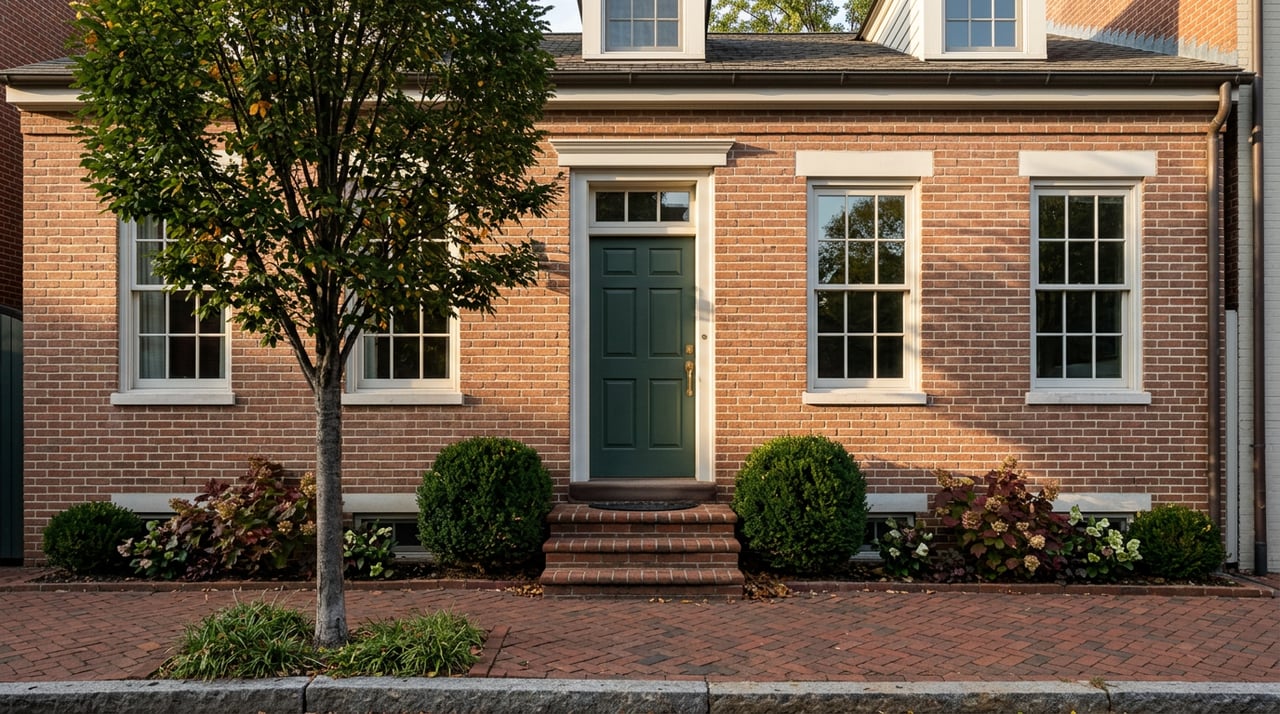
Trolley Square often stands out for Philadelphia buyers who want charm and walkability. Visit Wilmington describes it as a lively area with a pub and nightlife scene, tree-lined brick sidewalks, and quaint townhomes, many built between 1870 and 1900.
The same area is close to Brandywine Park, the Brandywine Zoo, the Delaware Art Museum, and the Delaware Avenue Farmers Market. If you want an older neighborhood feel with dining and park access, Trolley Square may feel especially comfortable.
The Riverfront offers a different style of city living. Visit Wilmington describes it as a pedestrian-friendly district with a riverwalk, shops, water-view dining, the Delaware Children’s Museum, Riverwalk Mini Golf, Frawley Stadium, and the Delaware Theatre Company.
The city also describes the Riverfront as a live-work-play district created from a former shipyard. If you are more interested in amenities, newer mixed-use surroundings, or condo-style options, the Riverfront may be worth touring.
You may also want to explore 40 Acres, the Highlands, Wawaset Park, and Trinity Vicinity. Visit Wilmington identifies these as primarily residential, walkable, historic neighborhoods near Trolley Square.
For buyers who want quieter residential streets while staying close to downtown dining and parks, these areas can be useful options to compare. Touring several pockets in one trip can help you quickly narrow your fit.
A move across state lines can feel simple on the map but still involve different taxes, paperwork, and home-search priorities. The smoother approach is to build your plan around both budget and lifestyle.
Start with these steps:
For many Philadelphia buyers, Wilmington offers a practical middle ground. You can stay close to Philadelphia, keep strong rail and highway access, and potentially buy at a lower price point with lower transfer-tax costs.
Just as important, Wilmington gives you several distinct neighborhood experiences, from classic walkable blocks to mixed-use waterfront living. If you want help comparing areas, estimating your buying costs, or finding the right Wilmington fit for your move, Myking Johnson can guide you through the next step.
Stay up to date on the latest real estate trends.
When working with Myking, know that her time and expertise will be completely devoted to you. She will collaborate with you to keep you informed every step of the way until your home ownership objectives are met. Call her or send her an email to get started!
Get In Touch With Our Team To Learn More

Myking Johnson, Licensed in Delaware
Phone: (215) 531-2301
Office: (855) 450-0442
Email: [email protected]
Address: 200 Continental Dr. Ste 401 Newark, DE, 19713